Many things can be said about this subject. First, it has always been quite difficult for people to understand it fully with the human mind. In my opinion, some people may not have a clear answer concerning the Trinity, or they may struggle to understand it completely, yet they still believe in God.
Most people, however, accept it by faith. The most important thing is that we give our hearts to God and believe in Him. There are also people who stand firmly on the doctrine of the Trinity—which is true—and defend it. Doctrinally, they are on the right side, but even so, their lives may show otherwise, making us aware that they have not truly repented or genuinely believed in God.
Therefore, the most important thing is that we believe in Jesus and accept Him with our hearts. What we need to know about the Trinity, however, is that it cannot be fully comprehended by human logic. Naturally, our minds may wonder, “How can God be one and yet exist as three persons?” But this is possible because we are not speaking about an ordinary person, but about Almighty God. He is great, all-knowing, and all-powerful; for Him, everything is possible.
If this is how He has chosen to carry out His work, then there is a reason for it, and He will do it this way. I personally believe that one of the main reasons is us, because through the Trinity, God approached humanity in human form by sending His Son, Jesus, who is in His bosom (John 1:18), and is a perfect representation of the Father, and afterward, God continued communicating with us through His Holy Spirit.
He also did it this way because His Son had to come to earth in human form and die for people’s sins. Jesus is the Son of God and one of the three persons of the Trinity, because He is God Himself. Of course, people may ask why Jesus prayed to His Father if He Himself is God. But He came to accomplish the plan through which we can be saved. He had to become a man and show us the perfect example of how we should live. Jesus truly lived as a man. Of course, God is powerful enough to be here on earth in the form of a man and, at the same time, remain present in heaven, because He is omnipresent. And today, He is still here among us and lives within believers through His Spirit.
Even though we do not find the word “Trinity” in Scripture, we are speaking here about the character and nature of God. Through the following examples found in the Bible, we will see this confirmed. The Greek term trias, referring to the Trinity, is first known to have been used by the early Church Father Theophilus of Antioch, while Tertullian later used the Latin term trinitas to describe what the Bible teaches about God’s nature and the way He works.
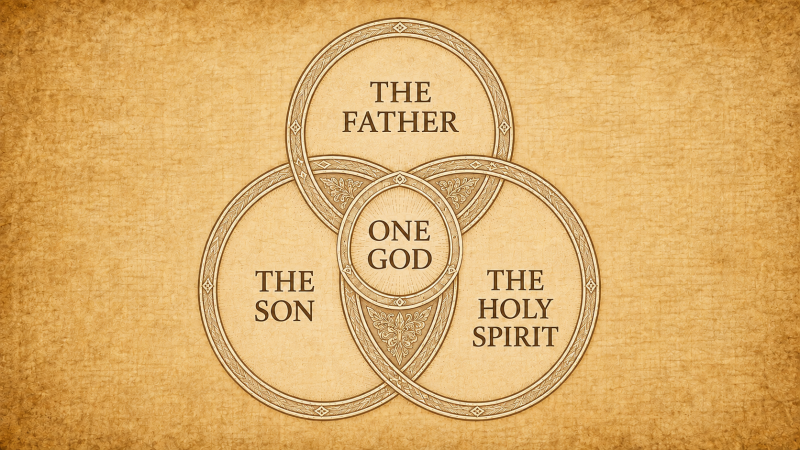
When discussing the Trinity, we are not talking about three different gods or three independent beings. The Father, the Son, and the Holy Spirit exist in complete harmony, and they are one God. We also cannot simply say that one person manifests Himself in three different ways. They are three distinct persons who carry out different functions, yet they share the same divine nature and act according to the same divine will and purpose. That is why we say that they are three persons and yet one God. Here we find the mystery of the Trinity and the difficulty of explaining it simply through only a few examples.
The Scriptures tell us about their oneness, as well as the specific functions they have. Therefore, we need to understand more deeply the work and purpose of each person, while also focusing on their unity and oneness.
We are speaking about one God in three persons, each carrying out a distinct role while sharing the same divine purpose. God the Father governs over all and holds everything in His hands. The Son came to die for our sins and give us the opportunity to believe and be saved. Through Him, the mercy of God is revealed. One day, He will also judge the nations, but until then, the message of salvation continues to be proclaimed so that people may accept Him.
The Holy Spirit communicates God’s truth to us, guides us, and may also give revelations and visions according to God’s will. He is the One through whom God wants to communicate with us. These three persons, although carrying out distinct and specific functions, have the same character, vision, and purpose because they are one God and are perfectly united. John 1:18 states that Jesus is in the bosom of the Father.
We are speaking about the Father, the Son, and the Holy Spirit.
“For there are three that bear witness in heaven: the Father, the Word, and the Holy Spirit; and these three are one.” (1 John 5:7).
Obviously, when speaking about “the Word,” we mean Jesus, because He is identified as the Word in the Gospel of John:
“In the beginning was the Word, and the Word was with God, and the Word was God.” (John 1:1)
Each person of the Godhead would react and act as God Himself would because they are one God. They are three distinct persons, each with a distinct name, because each carries out a specific role and accomplishes a particular part of God’s work. They all participate in the salvation of the believer, as this is how God works in the life of a person. Together, they carry out the same purpose. The Son gave His life to redeem people, and the Holy Spirit reaches out to them. Their works are God’s works, and this is how God carries out His work.
We need to notice that some people are more inclined to believe that the Holy Spirit is one of the persons of the Trinity and carries out God’s work than to believe that Jesus is also one of the persons of the Trinity and is God Himself. This is because He became a man, and people find it difficult to believe that God came in human form. Not only that, but they may also find it difficult to believe that God wants to have a relationship with human beings.
This was also the struggle that many Jewish people had with Jesus. Even though they were waiting for the Messiah, in their eyes, He was not the One, probably because of the way and the form in which He came.
“The Jews answered Him, saying, “For a good work we do not stone You, but for blasphemy, and because You, being a Man, make Yourself God.” (John 10:33)
This is exactly why they wanted to stone Him. People today still struggle to believe that God dwells in the hearts of believers. To them, believers are simply people like everyone else who follow a particular idea or way of life. We can often hear someone say to a believer, “But how can you know what God thinks about this situation, or how can you know the will of God?”
However, this is precisely what Jesus promised to those who believe in His name.
“However, when He, the Spirit of truth, has come, He will guide you into all truth; for He will not speak on His own authority, but whatever He hears He will speak; and He will tell you things to come.” (John 16:13)
Of course, believers are simply people with their own weaknesses. However, it is this way for a purpose: so that the power of God may be seen in them and it may be known that this power comes from God.
We can see that the idea that God cannot dwell within a person has existed for a long time. The devil also tries to plant such thoughts in people’s hearts. From this, we can understand how important it is for us to believe in this doctrine and stand firmly behind it. First, because it is biblical, and second, because it reveals the nature and character of God: He is interested in us, came to die for us, and sent His Spirit to guide us into all truth.
“In the beginning was the Word, and the Word was God. He was in the beginning with God. All things were made through Him, and without Him nothing was made that was made.” (John 1:1-3)
“And the Word became flesh and dwelt amongst us, and we beheld His glory, the glory as of the only begotten of the Father, full of grace and truth.” (John 1:14)
Another truth is that believing in the Trinity exalts the person of Jesus because it recognizes Him as God. Of course, He came in humble human form, but at the same time, He was much greater—far more than any prophet or godly man who came before or after Him. This is what the whole Bible does: it points to and exalts the person of Jesus. Do you think God would give His divine glory to someone else? Of course not.
“For My own sake, for My own sake, I will do it;
For how should My name be profaned?
And I will not give My glory to another.” (Isaiah 48:11)
This confirms the divine identity of Jesus. How else could God exalt Him so greatly and give Him divine glory if this verse says that God will not give His glory to another? He did this because, by exalting Jesus and giving Him divine glory, God glorified Himself. Jesus is in the Father, and the Father is in Jesus. Glorifying Jesus is therefore glorifying God, because in Him the nature and character of God are fully revealed, and He possesses the very essence of God. John 1:18 tells us that He is in the bosom of the Father.
From the way Jesus is exalted throughout the Bible, we conclude that He is fully God and shares the same divine nature, since Isaiah 48:11 says that God will not give His glory to another. We cannot say that Jesus is another God or merely someone who has the same status as God. He is God Himself, because God is one, and the Father, the Son, and the Holy Spirit are one. Therefore, we conclude that not believing in the Trinity diminishes the true importance of Jesus and places Him merely among other extraordinary men.
Many extraordinary men have existed throughout history, both in the Christian and non-Christian worlds. Some were considered righteous in the eyes of certain people, while others were not.
However, we need to understand that here we are speaking about the Author of our salvation—Jesus Christ—the One through whom everything was created and who will judge everyone on the final day. That is why we cannot say that He was merely an extraordinary man or simply a good example for everyone, although He certainly was an example, nor can we measure ourselves against Him. Of course, He left us an example so that we could follow in His steps and overcome struggles and battles in His name. But He will always be much greater than we are.
Here we are speaking about Jesus, one of the three persons of the Holy Trinity, fully God and equal with the Father in divine nature—not another God, but God Himself, YHWH. Why else do you think His blood is sufficient for our salvation? Why was He completely pure and blameless? Why was His sacrifice so great and capable of redeeming us? It is precisely because Jesus made this sacrifice, and only He could have done it.
We can see indications of the Trinity in many parts of the Bible, both in the Old and New Testaments. One example is found in Genesis 18, where we see three visitors coming to Abraham. He receives them as his guests, and afterward, two of them depart toward Sodom, while one remains with Abraham. I had always thought that all three of them went to Sodom, but then I noticed that only two went there. The One who remains is the Lord, and Abraham speaks to Him as he would speak to God Himself, imploring Him to have mercy on Sodom (Genesis 18:22–33).
We already see here the way and the idea of God appearing in human form and coming down to us on earth. Why? Perhaps because in this way we can understand Him better. Why did He later choose to come down to earth, dwell among us, suffer like us, and experience what we go through? I personally see Jesus in the One who remained with Abraham. We can also see Him in Genesis 1, when God speaks in the plural while creating the world, saying, “Let Us make man in Our image, according to Our likeness…” (emphasis added).
There is also the parable of the barren fig tree in Luke 13:6–9:
6 He also spoke this parable: “A certain man had a fig tree planted in his vineyard, and he came seeking fruit on it and found none. 7 Then he said to the keeper of his vineyard, ‘Look, for three years I have come seeking fruit on this fig tree and find none. Cut it down; why does it use up the ground?’ 8 But he answered and said to him, ‘Sir, let it alone this year also, until I dig around it and fertilize it. 9 And if it bears fruit, well. But if not, after that you can cut it down.’ ”
We see a man who had a fig tree planted in his vineyard. The tree represents us—mankind; the keeper of the vineyard represents Jesus, while the owner of the vineyard represents God. Generally speaking, mankind has failed to bear fruit and deserves to be cut down. It might sound harsh, but without Christ we are fruitless. Without Him, we cannot bear fruit that glorifies God. We can do many other things, but not what truly pleases Him. The tree can be compared both to mankind in general, as we already said, and to each one of us personally.
What saved the tree from being cut down was the intervention of the keeper of the vineyard. He asked the owner to give the tree another opportunity to bear fruit. He gave it some more time and special care that could help it become fruitful.
If the tree did not bear any fruit during the following year, it would still be cut down. In this case, we see Jesus giving this opportunity to all of us through His sacrifice. He gave us not only another opportunity but also special care and help through His blood. We receive all of this through faith in what He has done. Here we see another aspect of God’s character—the one that reveals His mercy.
We all know that God is perfectly just and cannot tolerate sin, but at the same time, He has provided a solution. Knowing that, by His very nature, He cannot overlook sin and that whoever commits sin must pay the penalty for it, He provided a way for people not to pay what they deserve. Since justice had to be served, He decided to pay the price in our place. Here we see the mercy of God. He knows that justice must be served, but He also had compassion on us.
He did not want to see us suffer and decided to give us another opportunity. God is merciful, and He reveals His mercy through Jesus. In Him, God expressed the fullness of His mercy when He sent Him to earth, and through Him, He will express His full judgment one day, just as the owner told the keeper of the vineyard to cut down the fig tree if it did not bear fruit after the opportunity given to it (Luke 13:7–9).
Those who believe will bear fruit and will not be condemned on the final day, while those who do not believe will have to answer before God for their deeds.
This parable shows the keeper of the vineyard advising the owner to preserve the tree. Just think: would God need to receive advice from someone lower than Him, since He is all-powerful and all-knowing? Of course not.
Here, we see God represented in two distinct persons, both carrying out the same divine will. Each of these persons expresses God’s character. The Son represents mercy, while the Father represents justice. God is love, but He is also just. It is interesting that these were their specific roles at that moment, although each one of them can express both justice and love. The Son will participate in the final judgment (Matthew 25:31–32, Acts 17:31, 2 Timothy 4:1), while the Father so loved the world that He sent His only begotten Son as a redeeming sacrifice, giving the world another opportunity.
I know it is difficult to understand or comprehend through human logic, but this is the way it happened and the way God works.
For us, it is difficult to comprehend that God was present in the Son here on earth while at the same time remaining present in heaven, and that He came in the form of a man. As we said before, this is a common thought today, and it was in the past as well—that God could not be present here as a man. But He was.
And still today, He dwells in believers through His Holy Spirit. Obviously, they are not equal to Jesus, but when the Spirit is in them, they can understand and perceive the truth that comes from God. By this, we see that God wants to come closer to people; He wants to have a relationship with them. And this is the way He does so.
If a person cannot receive from Him directly through His Spirit, then He might send another person to warn them or deliver the message to them, just as He sent Jesus in human form so that His message could reach people. And also today, He sends people inspired by His Holy Spirit to others. The difference between them and Jesus, obviously, is that Jesus was God incarnate and perfectly revealed the Father. This is something we cannot do, but the Holy Spirit can still fulfill His purposes through us if we allow Him.
“Jesus said to him, “Have I been with you so long, and yet you have not known Me, Philip? He who has seen Me has seen the Father; so how can you say, ‘Show us the Father’? Do you not believe that I am in the Father, and the Father in Me? The words that I speak to you I do not speak on My own authority; but the Father who dwells in Me does the works.” (John 14:9–10)
“Nevertheless I tell you the truth. It is to your advantage that I go away; for if I do not go away, the Helper will not come to you; but if I depart, I will send Him to you.” (John 16:7)
And through all this, we see that everything leads to the Father. The work of both the Spirit and the Son leads to the Father because all three are one. The Son glorifies the Father, and the Spirit glorifies the Son, while all of them work together in perfect unity.
“He will glorify Me, for He will take of what is Mine and declare it to you. All things that the Father has are Mine. Therefore I said that He will take of Mine and declare it to you.” (John 16:14–15)
Here we also see how the three of them work perfectly together as one because they are one God. We see that the Holy Spirit partakes in what belongs to Jesus and that everything the Father has also belongs to Christ.
And the work of the Spirit is to glorify God. By this, we can also see evidence that someone is a Christian and that the Spirit of God dwells in him—if he desires to glorify the Father. The believer will desire to glorify God because the Holy Spirit dwells in him. No one is capable, by his own strength and desire, of truly glorifying God, but the Holy Spirit helps him. Only what we receive from Him is worthy enough to be given back to Him and accepted by Him.
12 Both riches and honor come from You,
And You reign over all.
In Your hand is power and might;
In Your hand it is to make great
And to give strength to all.
13 “Now therefore, our God,
We thank You
And praise Your glorious name.
14 But who am I, and who are my people,
That we should be able to offer so willingly as this?
For all things come from You,
And of Your own we have given You.
(1 Chronicles 29:12–14)
From all these Scriptures, we see all three of them—the Father, the Son, and the Spirit. Three distinct persons, but one God, each carrying out a specific role in the way God wants to reach us. It is still difficult to fully understand, but the fact is that Jesus couldn’t have been just an average person, a prophet, or a godly man because, in the end, He died for the sins of humanity. No other person could have done that. I am not referring just to the fact that He died, but that He bore all those sins upon Himself, and His innocent blood was sufficient to provide forgiveness for the sins of those who believe. There was something much greater in this than simply a good intention or a good deed. Where did the strength and power of Jesus to accomplish all of this come from? It was divine power—the power of God.
Jesus represented the mercy of God when He came here on earth. Obviously, we need to know that God is not divided into parts. He is complete love, complete justice, and complete mercy, but at that moment, when Jesus came among us, He especially revealed God’s mercy. Jesus is God, so He is also complete, and we can see this from the fact that He will carry out God’s judgment at the end, as it is written in the book of Revelation (Revelation 19:11–16). He is the One seated at the right hand of the Power. We can say that He acts as the right hand of God, through whom God created everything. He carries out God’s works, and through Him God acts, since everything was created through Him.
“In the beginning was the Word, and the Word was with God, and the Word was God. He was in the beginning with God. All things were made through Him, and without Him nothing was made that was made.” (John 1:1–3)
Everything visible and invisible comes from Him. He is the Word spoken by God.
One day, Jesus will return, not offering mercy anymore, but for judgment. However, it was pleasing to God to first give everyone an opportunity and then to judge, so that no one would be left without a chance to be saved. Unfortunately, we know that not everyone will accept the gift of God.
“Now I saw heaven opened, and behold, a white horse. And He who sat on him was called Faithful and True, and in righteousness He judges and makes war.” (Revelation 19:11)
We see the authority of Jesus here. He is the One through whom God works. He is the One through whom God reveals Himself to humanity. He is the way God reveals Himself to us, while always being God at the same time. They all—the Father, the Son, and the Holy Spirit—reveal the one God.
With all that has been said on this topic, I do not claim that this is a complete description of what the Bible says about the Trinity. I also approached this topic with due fear and respect, and I had to review and edit it at least a couple of times after publishing it. I do acknowledge, however, that I might have said something that is out of place or inaccurate. The best thing for you is to examine what the early Church established concerning this doctrine and also to seek a personal conviction from God on the topic.
Still, I stand behind this doctrine, which exalts the three persons of the Trinity and the way God has chosen to reconcile us to Himself—through the sacrifice of His Son. In fact, this doctrine also exalts the sacrifice of the Son and its significance. This is the way God has established for us to be saved.


Add comment
Comments